

A Curated Guide to Japanese Tableware
More than just vessels for food, Japanese tableware invites you to experience beauty in daily life. This guide will help you explore the stories and craftsmanship behind each piece.
What You'll Discover in This Guide:
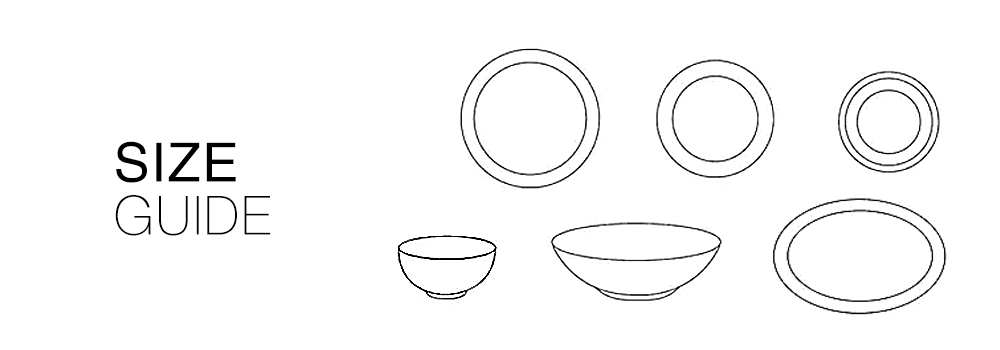
Understanding the Names & Types
The following table outlines common types of Japanese tableware and their typical uses:
| Product Type | Description | Typical Size |
|---|---|---|
| Dinner plate | The standard main dish plate | 19-28cm diameter |
| Side plate | For desserts or small servings | 12-18cm diameter |
| Bowl | Used for rice, soup, or side dishes | 11-18cm diameter |
| Ramen Bowl | Specifically large and deep for ramen | Approx. 24cm diameter |
| Serving plate | Large, often rectangular or square | Over 28cm |
The Heart of Craftsmanship: Materials & Regional Kilns
Japanese tableware commonly employs three materials, each with a distinct character.
Earthenware (Tsuchimono)
Warm and rustic, earthenware is crafted from natural clay and fired at lower temperatures, giving it a tactile warmth. It is typically glazed to make it suitable for daily use.
Porcelain (Ishimono)
Refined and durable, porcelain is fired at high temperatures, making it waterproof and resistant to odours. It is admired for its elegant, smooth finish.
Lacquered Wood (Urushi)
A symbol of luxury and tradition, Urushi lacquerware involves meticulously coating wood with natural lacquer, resulting in a smooth, glossy, and durable surface.
The Significance of Regional Kilns
The origin of a piece, such as Mino Yaki or Hasami Yaki, tells the story of the specific clay and centuries-old traditions of that region. "Yaki" translates to kiln, highlighting the unique identity that comes from these famous pottery centres.
Appreciating the Unique Details
Each handcrafted piece showcases distinctive aspects, such as subtle colour variations or uneven surfaces. These are the cherished signs of traditional craftsmanship.
Some pieces may also feature "Kannyu" (貫入), a technique that creates fine, web-like crackles on the glaze. This is intentionally crafted to enhance the visual appeal and uniqueness of each piece.
When you buy our Japanese tableware, you will notice these small differences. They are the marks of authenticity that make each item special.

A Note on Packaging
Packaging varies by product. To see how a specific item is packaged, please refer to its product photos.
- If a box is pictured, your item will arrive in that box. Please note that unless described as a 'gift box', manufacturer packaging is often simple and designed for transit.
- If no box is pictured, the item does not come with its own box. Rest assured, we will pack your order carefully for safe delivery.
For any questions, please contact us at hello@mycookware.com.au.
Article updated on 8 August 2025.
Authored by Kai, product specialist at My Cookware®.
Kai regularly travels to Japan to meet with artisans and personally select the unique, high-quality pieces for our collection.
COPYRIGHT WARNING: All content is protected and infringement will be penalised.


