

Tsubame Sanjo Hammered Style Nitrided Carbon Steel Induction Wok
This 30cm Tsubame-Sanjo wok is handcrafted in Japan’s renowned metalworking region, known for over 400 years of expertise.

When Adam Liaw received his recommended Japanese-made wok from us, his approach to caring for it sparked a fascinating discussion. His everyday use and practical advice provide insight into how a seasoned cook handles carbon steel differently from the manufacturer’s instructions.
In this article:
The Japanese-made wok featured in this article is now part of our Cook Like Adam series.
Cook like Adam. Explore the method. Make it your own.
The instructions from the leading Japanese manufacturer are straightforward: after cooking, wash the wok—either with or without detergent—dry it, then apply a spoonful of oil to the interior, spreading it evenly to keep the surface glossy.
Adam told us he seasoned his wok with oil before first use, as recommended. However, he doesn’t apply oil after each wash. From that point on, he developed his own approach—one shaped by frequent cooking and daily routine.
Adam Liaw and the recommended Japanese-made wok in a promotion event
Adam once brought his wok to an ABC talk show, along with a charming drawing, which he shared as a portrait of one of his ancestors. As someone who uses carbon steel woks daily, Adam’s maintenance routine is surprisingly minimal.
He never seasons the wok with oil after use. Instead, he washes it with a bamboo brush under running water—without detergent—and allows it to air-dry.
This method, he explained, is common in professional kitchens where woks are in daily use. It suits his lifestyle, where the wok rarely sits idle.
Is Adam right, or is the Japanese manufacturer right?
Actually, both methods work and will preserve your wok. The goal with either approach is to maintain an oil layer on the surface. Adam keeps using his wok with oil and without detergent, which preserves that layer—but remember, he uses his wok nearly daily.
The choice depends on how often you cook and how you store your cookware.
The key is to maintain an oil coating on the surface. With regular use, this builds a non-stick, rust-resistant layer that improves over time. In fact, Japan also has various brushes that allow us to clean carbon steel cookware thoroughly without using detergent.
But what all of us also agree on is how safe a Japanese-made wok is. Japan’s (食品衛生法 Shokuhin Eiseihō)—Food Sanitation Law—sets strict standards for materials used in food-contact products. These include requirements for heavy metal content. Japanese carbon steel woks must meet these safety standards, giving consumers peace of mind when cooking at high heat.
Our woks from 燕三条 (Tsubame-Sanjo)—a region renowned for its metalworking heritage—are especially respected. These are crafted in factories that produce some of the finest stainless steel and carbon steel cookware in the world, built with precision and backed by generations of expertise.

We have been there regularly and witnessed its craftsmanship. The only issue is that fewer young people are entering the industry, and with a shrinking population, the ageing workforce means production of these quality woks remains limited in quantity.
Some may claim Japan is not a wok culture, but this oversimplifies the country’s diverse culinary practices. Wok-style cooking is alive and well in Japanese households and professional kitchens—particularly for stir-frying, tempura, and deep-frying.
In Japan, a wok is referred to as (中華鍋 chūka nabe). There are variations such as agemono nabe for deep-frying and manaita nabe for tabletop cooking. Many cooks use carbon steel frypans in similar ways, maintaining them through seasoned techniques like oiling and brush-cleaning—very much aligned with how Adam Liaw cares for his wok.
The good news is that the Tsubame-made wok we are discussing in this article is now part of our Cook Like Adam series. This Japanese-made carbon steel wok comes with English instructions and reflects the same quality that Adam trusts in his kitchen.
Cook like Adam. Explore the method. Make it your own.
Authored by our specialist, Kai. We update this article regularly to reflect the latest customer feedback.
For any further enquiries, please email us at hello@mycookware.com.au or use the chat box on this page. Our team is committed to a swift response.
COPYRIGHT WARNING: Content theft of any kind is immediately reported to Google, which results in ranking penalties. Original texts can be verified in internet archives. My Cookware Australia® holds the copyrights for all the content on this site, including articles, product descriptions, and user guides.
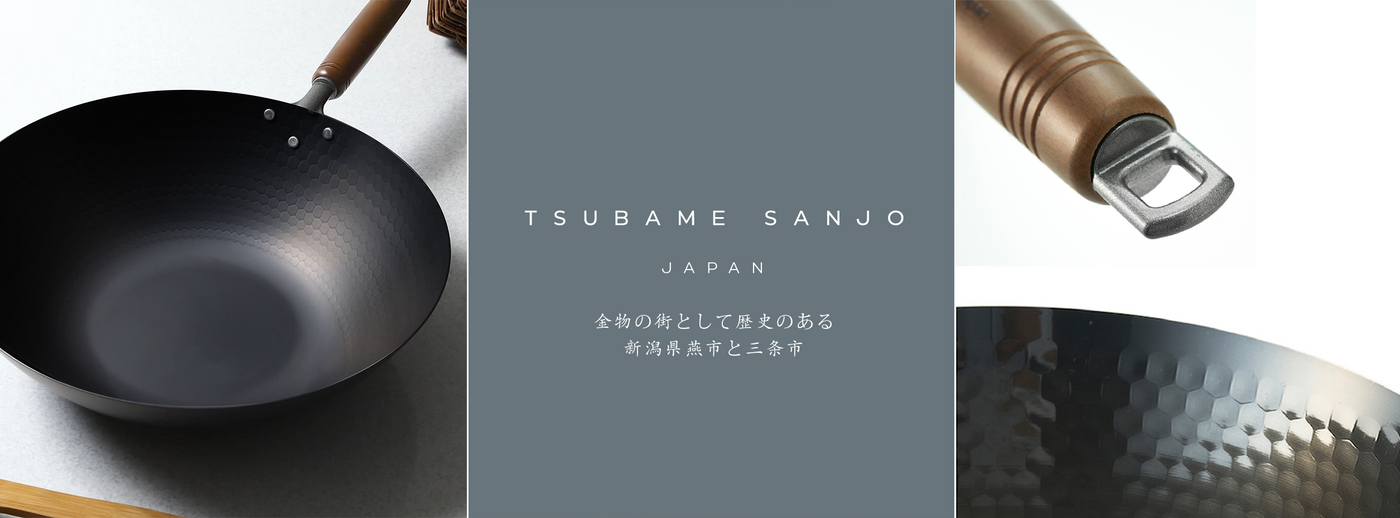
This 30cm Tsubame-Sanjo wok is handcrafted in Japan’s renowned metalworking region, known for over 400 years of expertise.
