

Ceramic Nonstick Cookware: A Trendy, Eco-friendly Choice
Last updated: 26 June 2026
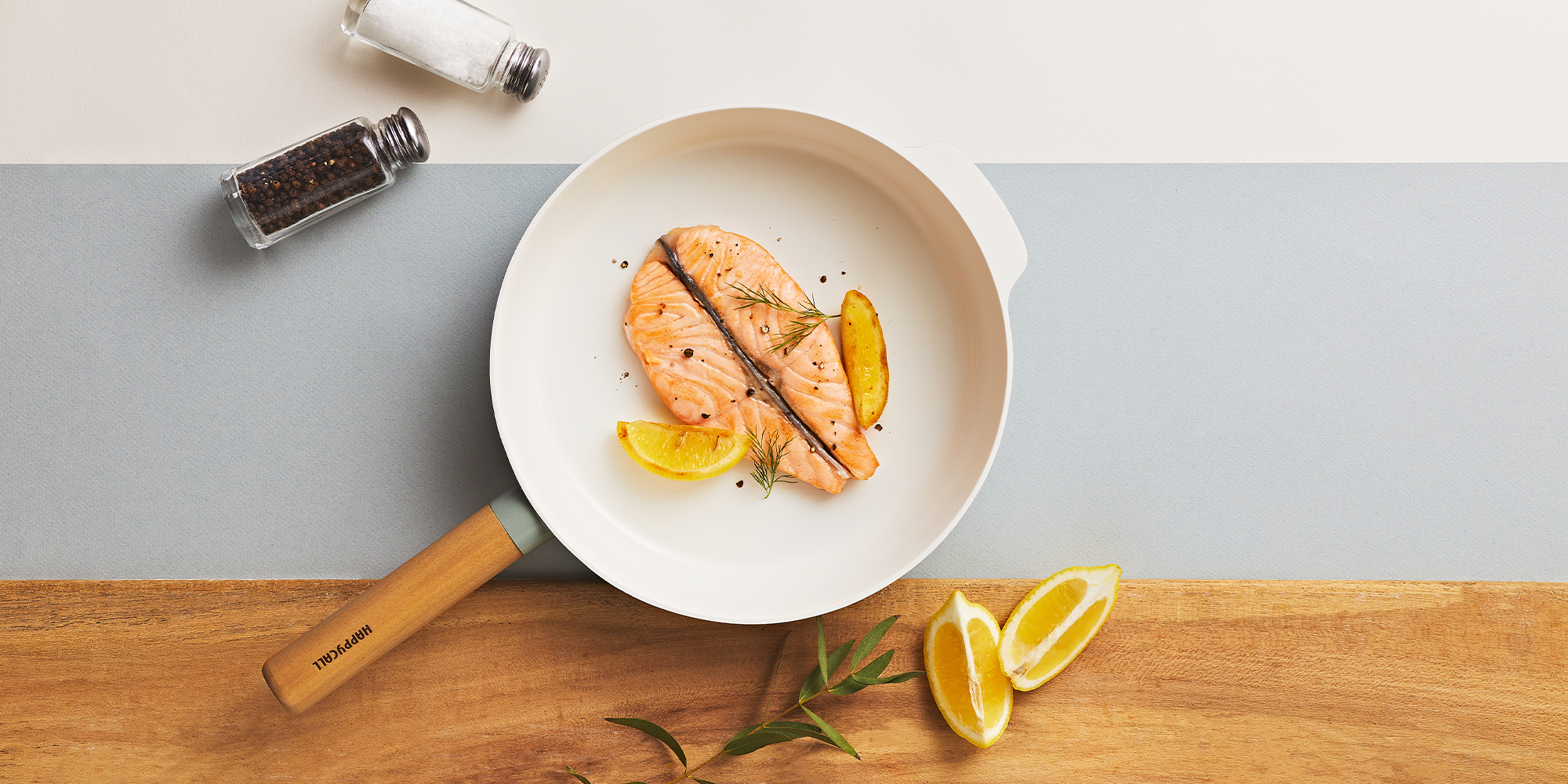
Ceramic nonstick has become the common alternative to PTFE for anyone who would rather not cook on a fluoropolymer coating. It behaves differently from PTFE in the pan, though, and the trade-offs run both ways. This article sets out what each one does well.
Our specialist, Kai, wrote this guide. In this guide:
- What ceramic nonstick is — how the coating is built up.
- Why people choose it — the coating, and the colours.
- The limitations — heat, chipping and lifespan.
- If you would rather skip nonstick — the uncoated options.
New to nonstick? Start with our nonstick woks and frypans FAQ, which covers the difference between PTFE and ceramic from the beginning.
What Ceramic Nonstick Is
A ceramic nonstick pan is a metal body — usually aluminium — with a silica-based ceramic coating applied to the cooking surface. It contains no PTFE and no PFOA.
Happycall builds several of its ranges with a stainless steel layer between the aluminium body and the induction base, so the aluminium is fully enclosed.
Why People Choose It
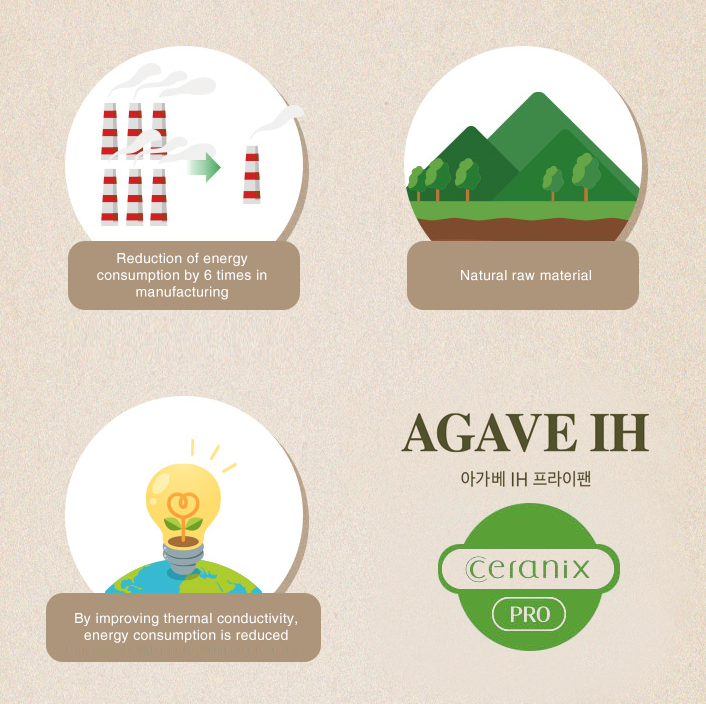
The main reason is the coating itself. Most PTFE cookware sold today is PFOA-free, which removed the compound that drew the original concern — but plenty of people would still rather cook on something that is not a fluoropolymer at all, and ceramic is the straightforward way to do that.
The second reason is appearance. Ceramic coatings take colour, so the pan can be finished in almost anything inside and out — the Agave and Blitz ranges are examples. PTFE coatings are usually black or dark grey.
The Limitations
- Heat: ceramic does not want sustained high heat. Extended exposure degrades the coating and the release properties go with it, so it suits medium heat and everyday cooking rather than hard searing.
- Chipping and scratching: the surface is harder than PTFE but more brittle, so a knock against the sink or a metal utensil can take a chip out of it.
- Lifespan: with careful heat control, a PTFE pan generally lasts longer than a ceramic one. Both are consumable — expect two to three years of regular use from either before the release starts to go.
Neither coating is permanent, which is worth factoring in when comparing prices against uncoated cookware.
If You Would Rather Skip Nonstick Altogether
Uncoated pans last decades rather than years, at the cost of more maintenance and a learning curve:
- Carbon steel — becomes nonstick through seasoning, handles any heat, needs drying and oiling.
- Stainless steel — nothing to wear out, unaffected by acid, but food sticks unless the pan is properly preheated.
- Hybrid stainless — a raised stainless grid over a nonstick base, so metal utensils are safe.
- Happycall cookware — ceramic, graphene and titanium ranges.
- Nonstick FAQ — coating types, care and when to replace a pan.
About the Author
Kai, the author of this article, is our product specialist at My Cookware®. For any questions, email hello@mycookware.com.au or use the chat box on this page.
COPYRIGHT WARNING: Content theft of any kind is immediately reported to Google, which results in ranking penalties. Original texts can be verified in internet archives. My Cookware Australia® holds the copyrights for all the content on this site, including articles, product descriptions, and user guides.


