

Why Is Binchotan (Japanese White Charcoal) Special?
Last updated: 31 August 2026
This article details the history, production process, and distinctive qualities of genuine binchotan charcoal to help you identify premium charcoal and select the suitable fuel for your grilling.
Our specialist, Kai, wrote this guide to Japanese white charcoal. In this guide:
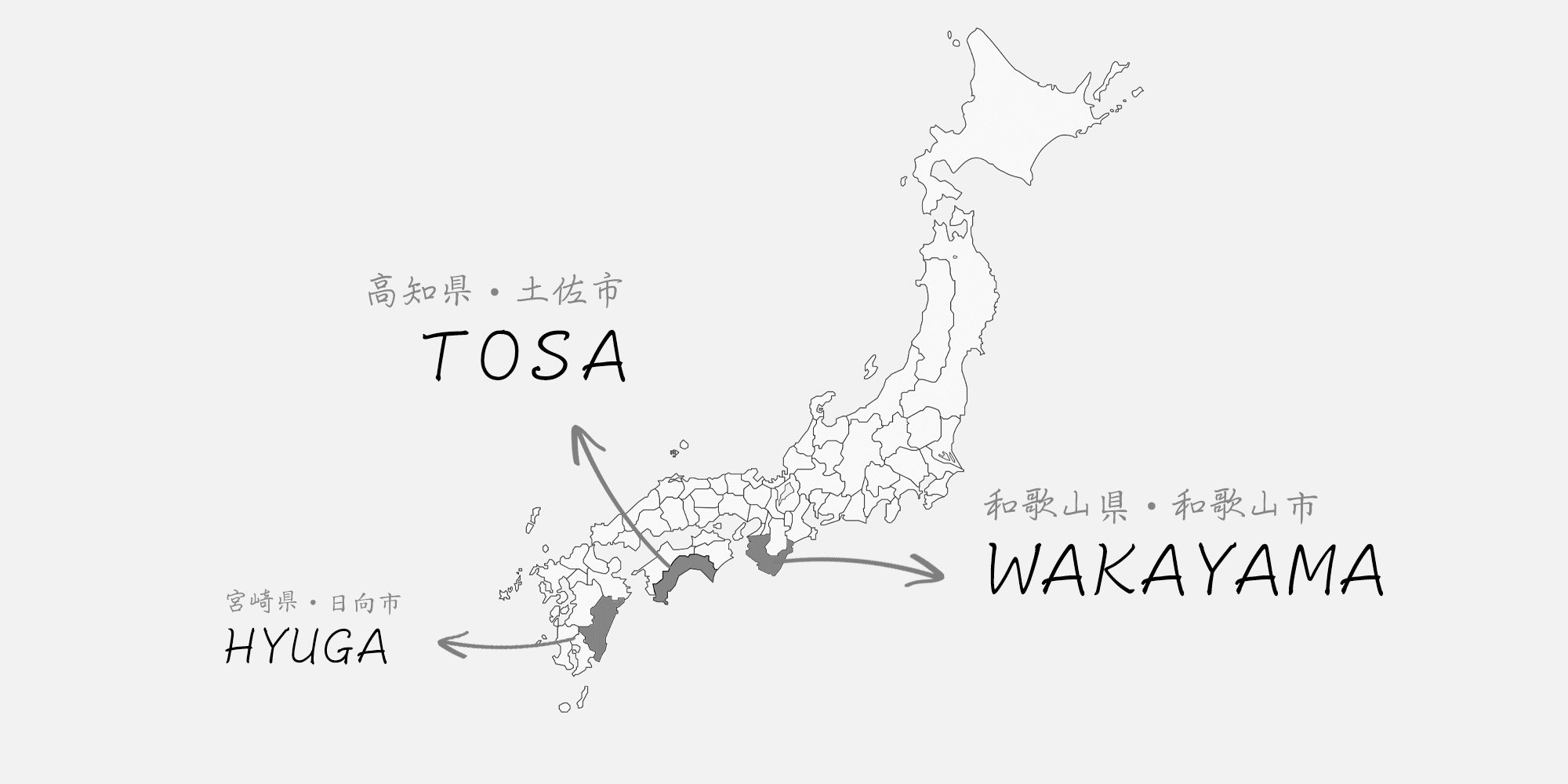
- The three regions — Kishu, Tosa and Hyuga compared.
- Ogatan binchotan — how compressed charcoal differs.
- How it is made — the two-week kiln process.
- Identifying quality — what to look, listen and feel for.
- Authentic vs imitations — the differences that matter.
The Hierarchy of Binchotan: Trust the Origin
High-end Japanese charcoal grill restaurants rely on binchotan for their distinct flavour profiles. Authentic binchotan offers exceptional thermal output, burns for 4 to 6 hours, and releases minimal smoke or odour. Quality, however, varies based on origin and production method.
Traditionalists and professional chefs recognise three primary production regions in Japan as the benchmarks for quality. For the highest grade, look for these names:
1. Kishu Binchotan
Produced in Wakayama Prefecture (historically known as Kishu), this is the birthplace of white charcoal. Often cited as the world's most expensive charcoal, it is the undisputed benchmark for quality.
Its unique production method creates a structure with zero internal cavities. This results in powerful infrared rays with low convection heat—meaning it cooks food deeply via radiation without the drying effect of hot air. For special occasions where perfection is required, Kishu is the primary choice.
2. Tosa Binchotan
Produced in Kochi Prefecture, Tosa Binchotan is a close rival to Kishu, sharing the same dense Ubame Oak source. It is particularly favoured by Unagi (eel) masters for its intense, stable heat and lack of odour transfer.
Its powerful infrared emission cooks ingredients rapidly, creating a texture that is crispy on the outside while juicy on the inside—a critical requirement for grilling delicate oily fish and premium meats.
3. Hyuga Binchotan
Produced in Miyazaki Prefecture, Hyuga is the third major production base. Traditionally crafted from Blue Oak (Arakashi), it undergoes a unique production process that involves drying the wood for over 30 days before carbonisation.
Because Blue Oak is slightly softer than Ubame Oak, Hyuga Binchotan is easier to ignite while still reaching searing temperatures. Japanese outdoor experts often praise Hyuga for its excellent cost-performance, offering authentic top-tier quality that is more accessible and user-friendly than the extreme density of Kishu.
Rosanjin Ogatan Binchotan
Rosanjin is a premium Ogatan Binchotan, a high-grade Japanese white charcoal made from compressed sawdust. While it differs from traditional whole-branch charcoal, it undergoes an identical high-temperature carbonisation process exceeding 800°C. This intensive firing method refines the compressed material into a dense, uniform structure. As a result, Rosanjin delivers a stable, exceptionally clean burn with minimal sparking, offering a reliable and cost-effective upgrade over standard mass-produced alternatives.
At My Cookware®, we stock authentic Kishu, Tosa, and Hyuga branch binchotan, alongside Rosanjin Ogatan Binchotan. Due to the scarcity of raw materials and the difficulty of production, supplies are limited and often out of stock.
How Authentic Binchotan Is Made
Visiting Wakayama allows one to observe the production firsthand. The young craftsmen at these sites perform the same tasks as their great-grandfathers. The quality relies entirely on the selection of native oak and the patience of the artisan.
The Process: Week 1
The quality of the oak determines the quality of the charcoal. Raw wood is placed in a kiln, where smoke is used to extract moisture. This requires patience; while constant heat would speed up production, it would degrade the quality. Experienced craftsmen cycle the heat, ensuring the oak dries completely without overheating. Any residual moisture will ruin the final product.
The Process: Week 2
Once dry, the temperature is raised, and the oak is lit. It burns for a full week. Craftsmen meticulously adjust the air intake to control the oxygen level, ensuring an even burn. When the kiln reaches approximately 1000°C, the oak glows red and is technically binchotan. It is then removed and immediately smothered in white ash to cool it rapidly.

This rapid cooling hardens the bark and leaves a white, dusty residue, giving it the name white charcoal. A single batch takes two weeks, meaning a kiln produces only two batches a month. This labour-intensive process is why authentic binchotan is always in short supply.
Identifying Quality
You can identify authentic quality immediately upon handling it. Genuine branch binchotan is heavy and dense. Premium grades typically feature long, round shapes. When broken, the interior shines like black glass. When two pieces are struck together, they produce a clear, metallic ringing sound—a hallmark of high density.
Authentic vs. Imitations
Due to the scarcity and cost of Japanese binchotan, many imitations have entered the market. These are often produced in countries like Vietnam or Indonesia using different wood types (such as eucalyptus) and faster production methods.
While these alternatives serve a purpose for budget-conscious grilling, they do not match the performance of the Japanese original. Imitations are less dense, burn for shorter periods, and often produce more ash and sparks.
The table below outlines the differences to assist you in making an informed choice between authentic Japanese branch binchotan and mass-produced imports.
Feature |
Authentic Binchotan | Imitations (e.g. Vietnam) |
Wood Type |
Native Japanese Oak | Fast-growing woods (e.g. Eucalyptus) |
Production Time |
Two weeks (Traditional Kiln) | Days (Mass Production) |
Burn Duration |
4–6 hours | 1–2 hours |
Heat Character |
Steady radiant (infrared) heat with little flame | Hotter flame, more convection heat |
Density |
Extremely High | Low to Medium |
Ash Residue |
Minimal, clean white | Excessive, dusty grey |
A Lasting Impression
Like traditional pottery or sword making, authentic binchotan embodies the spirit of Japanese craftsmanship. Genuine branch binchotan from Kishu, Tosa, or Hyuga, and premium compressed Ogatan Binchotan like Rosanjin, offer a clean, reliable grilling experience that imitations simply cannot replicate.
Once you have chosen your charcoal, our guide to safely lighting binchotan covers the next step, and the konro grill range shows what to burn it on.
About the Author
Authored by our specialist, Kai, a product specialist at My Cookware®. We review this guide as the range and supply change.
For any further enquiries, email us at hello@mycookware.com.au or use the chat box on this page. Our team is committed to a swift response.
See all binchotan and Japanese charcoal.
COPYRIGHT WARNING: Content theft of any kind is immediately reported to Google, which results in ranking penalties. Original texts can be verified in internet archives. My Cookware Australia® holds the copyrights for all the content on this site, including articles, product descriptions, and user guides.


